Created: 19 May 2015 · Last edited: 17 September 2026
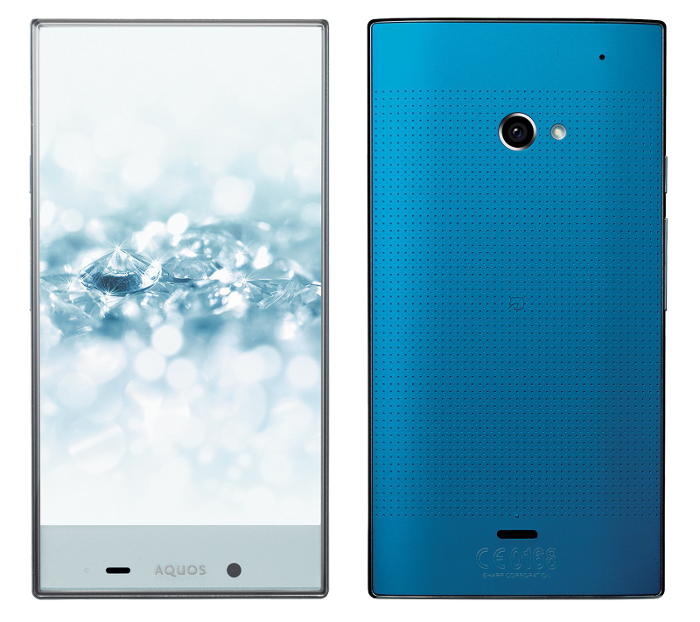
The first of two smartphones Sharp have launched on SoftBank in their Summer 2015 collection is the Aquos Crystal 2 (403SH), which is the successor of the Aquos Crystal of last year.
The Aquos Crystal 2 is, regretfully, again a mid-range model: it is powered by a Snapdragon 400 (MSM8926), an entry-level quad-core processor working at 1.2 GHz, which to many will sound too underpowered and obsolete, especially considering the fact that this processor is now two years old (announced in June 2013). The Crystal 2 has 2 GB of RAM and 16 GB of ROM, expandable using microSDXC memory cards of up to 128 GB.
The Aquos Crystal 2 supports a wide range of radio frequencies:
4G system: FDD-LTE (900 MHz / 1.7 GHz / 2.1 GHz) + AXGP (2.5 GHz)*
3G system: W-CDMA (900 MHz / 2.1 GHz)
GSM system: 900 MHz / 1800 MHz / 1900 MHz.
It is one of the SoftBank models that can be officially SIM unlocked. Read the SIM unlocking regulations news article for further details.
But let's see what makes it an upgrade from the Aquos Crystal (305SH/306SH):
The screen is now slightly larger: 5.2 vs. 5.0 inches. It has the same 720p HD resolution, and still uses the S-CG Silicon LCD, so nothing new here. Only the backlight technology appears to have improved: S-PureLED vs. the Pure-LED on the first Aquos Crystal. The amount of operating memory has been increased, too: 2 GB vs. 1.5 GB on the Crystal.
The built-in battery has a capacity of 2030 mAh and Sharp advertise it as "great battery power you can rely on [あんしんの電池持ち]" thanks to the Eco-Tech function that ensures energy-saving function of the CPU.
A significant improvement is that the Aquos Crystal 2 is waterproof (IPX5/7). We were all surprised when Sharp released a non-waterproof phone last year, it was so against its tradition.
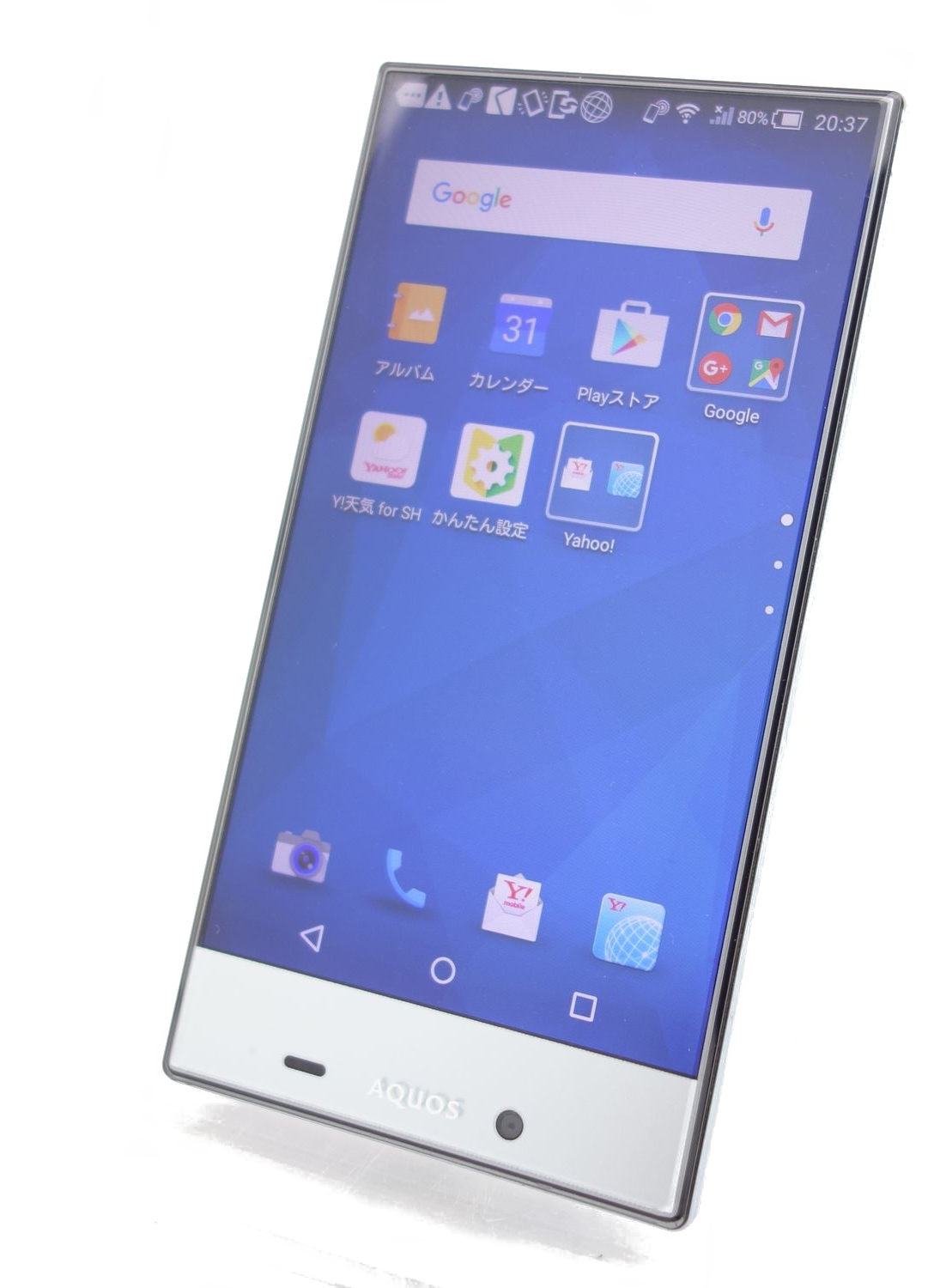
It is, without doubt, the screen design that makes the Crystal series stand out: a "frameless structure" as Sharp call it that has no side- and top-bezel. The Crystal series does not have an earphone speaker (traditionally located on the top) – instead, it relies on the Direct Wave Receiver technology to conduct the sound to your ears by vibrating the whole body of the phone, allowing you to touch whichever part of the phone to your face/ear to hear, also eliminating the possibility to be overheard.
The main camera on the Aquos Crystal 2 is basically the same as on the Crystal: an 8-megapixel autofocus CMOS sensor with shake reduction (none on last year's). The camera again has the Framing Advisor feature that helps take better photos, and has NightCatch II for shooting in low-light environments, although Sharp does not specify the aperture. Another enhancement is the ability to record time-lapse videos (1—10 sec interval).
The front-facing camera is now 2.1 megapixels, compared with the 1.2 MP on the earlier model.
Various convenient features are found on the Aquos Crystal 2 that rely on a range of sensors, the so-called Grip Magic functionality: just hold the body, and the display will light up to show the lock-screen with the clock. Or hold the body during an incoming call to hide the caller's name/photo; this will also minimise the ringer volume, but can work in the opposite direction when watching video – just hold the phone and the volume will increase. Something I find very convenient is the "Information in Vibe" feature: when the phone is in your pocket or bag, just hold it (without taking it out) and it will indicate if you have received new mail, or missed a call, by vibrating. Like all recent Sharp models, the Crystal 2 is also furnished with the Emopa service that allows your phone to communicate with a variety of household devices.
Other features include NFC/mobile wallet, One Seg, VoLTE, HD Voice, Bluetooth 4.0, Wi-Fi IEEE 802.11 a/b/g/n. Android 5.0 (Lollipop) comes pre-installed. No OS upgrades were released.
The Aquos Crystal 2 measures 71 × 136 × 11 mm and weighs 153 grams (including the built-in battery). It is offered in turquoise, white, black, and pink.
Unlike the first Crystal, SoftBank did not attempt a US launch with the Crystal 2, following the disappointing sales of its predecessor. Sadly, Sharp seems not to have learned the lesson: if you want to break into a new market, you need to bring your best, not a half-baked “looks great, but... well...”. It is a mistake Sharp would repeat again and again in the years to follow.
Specifications
- Display: 5.2 inches, 1280 × 720 px — S-CG Silicon LCD
- CPU: Qualcomm Snapdragon 400 (MSM8926) — 4 × 1.2 GHz
- Rear camera:
- 8 MP CMOS, AF, SR, f/1.9
- 1080p @ 30fps
- Front-facing camera:
- 2.1 MP CMOS
- unknown
- Battery: 2030 mAh (non-removable)
- Operating system: Android
- OS version at launch: 5.0
Advertisement
 AQUOS
Crystal 2
403SH
- Waterproofing: IPX5/IPX7
- Dustproofing: None
- Operating memory (RAM): 2 GB
- Built-in storage memory: 16 GB
- External storage: microSDXC, 128 GB
 AQUOS
Crystal Y
403SH
- Waterproofing: IPX5/IPX7
- Dustproofing: None
- Operating memory (RAM): 2 GB
- Built-in storage memory: 16 GB
- External storage: microSDXC, 128 GB