Created: 3 October 2018 · Last edited: 22 September 2026
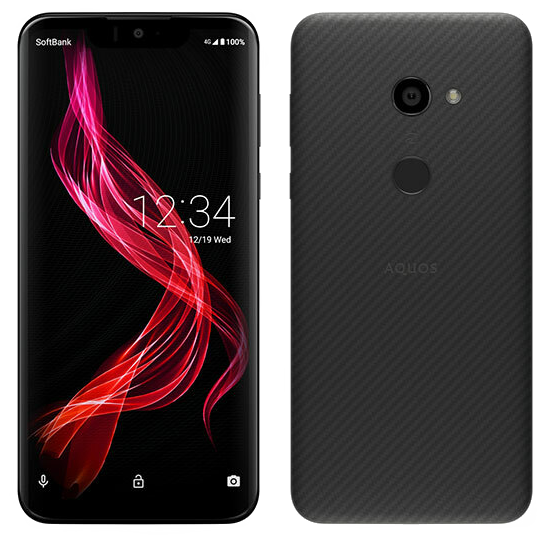
While we were all expecting the Winter 2018/2019 flagship to be the third in the Aquos R series, that's not what Sharp were thinking – and they called it the Aquos zero. And that name does suit the world's lightest smartphone having a screen of 6 or more inches – the Aquos zero weighs 146 grams. For comparison, the 5.8-inch iPhone XS weighs 177 grams and the 6.5-inch iPhone XS Max 208 grams. The 5.8-inch Samsung S9 weighs 163 grams, and the 6.2-inch Samsung S9+ weighs 189 grams, while the 6.0-inch LG V35+ ThinQ weighs 157 grams.
The savings in weight have been accomplished thanks to the utilisation of aramid fibre – used in aerospace and military applications, for ballistic-rated body armour fabric and ballistic composites, among others – for the back panel, and magnesium alloy for the side frame. These materials also guarantee extra strength and rigidity of the device.
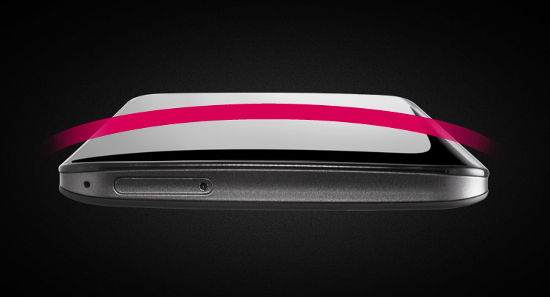
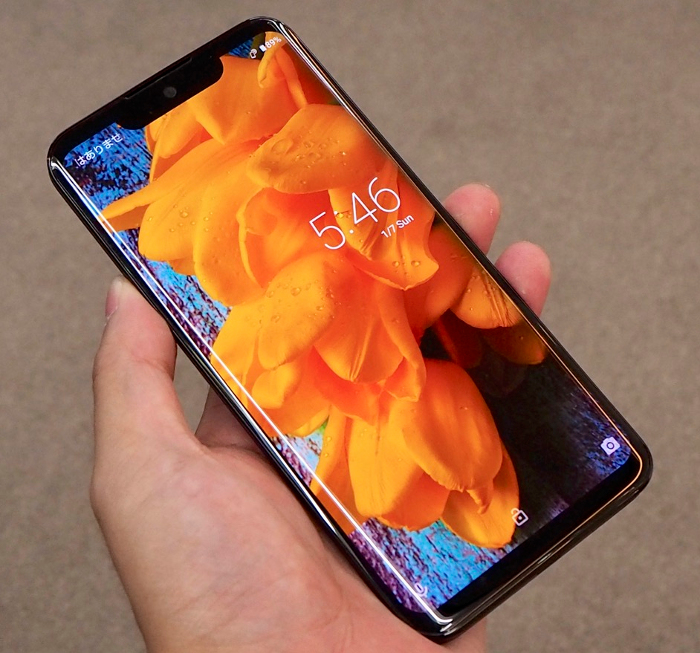
But that's not all. Indeed, we're only now starting with the cool stuff. As showcased at the IFA exhibition in Berlin in the beginning of September 2018, the Aquos zero has "full-curved surface design" where the display gradually rises towards the centre and contributes to "natural touch operations suitable for finger movement" and "comfort during extended use".
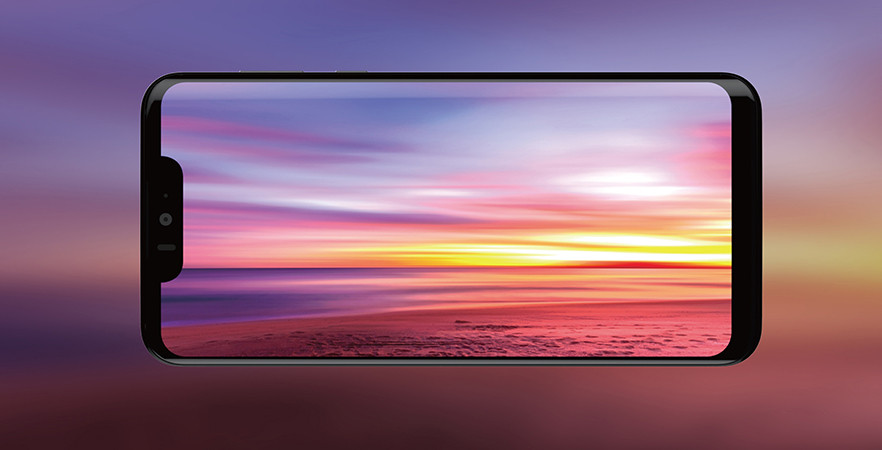
The Aquos zero boasts Sharp's first organic light-emitting diode (OLED) display that achieves a high 1,000,000:1 contrast, and covers 100% of the DCI-P3 (digital cinema standard) wide colour gamut. Inherited from the Aqous R series is the smooth gradation and rich colour tone of the Rich Color Technology Mobile, that is the mobile version of the Aquos TV series.
The Aquos zero display also adopts the Dolby Vision HDR video and the stereophonic Dolby Atmos technologies for realistic image and immersive sound experience (it has two speakers – one on the top edge and one on the bottom) that was one of the main selling points of the summer 2018 Aquos R2.
However, the display resolution is not the 3120 x 1440 pixels that was speculated at the IFA – it is in fact slightly lower, 2992 x 1440 pixels. Unfortunately, the Aquos zero has the ugly and larger-than-necessary iPhone-style display notch at the top. In fact, the top bezel is so big that it could have easily housed the front-facing camera even without a notch.
The Aquos zero is powered by a Snapdragon 845 processor, has 6 GB of RAM, and 128 GB onboard storage (UFS type). This is the first Sharp phone that does not support external storage – the microSD slot has been ditched, perhaps in an attempt at further reducing the device weight.
The rear camera (only one, unlike the Aquos R2) is again 22.6 megapixels, wide-angle (90°), f/1.9, focal length equivalent to 22 mm, optical image stabilisation, electronic hand-shake correction for video capture, phase-detection auto focus, high-speed-video capable sensor found on the Aquos R2), while the front-facing is 8 MP, wide-angle (90°), f/2.2, focal length equivalent to 23 mm. The selfie camera supports the Face ID owner recognition feature.
One hardware improvement introduced with the Aquos zero is Parallel Charging. This means the device now has two charging circuits intended to suppress heat generation and dissipate heat more evenly while charging, so that the phone doesn't feel like touching a hot furnace – and that you can enjoy games and videos while connected to the charger.
This is the first Aquos phone in a long while to ditch the 3.5 mm phono jack, perhaps for design and weight-saving reasons – and to compensate for the lack thereof, Sharp are offering an adapter with it.
The Aquos zero is released running Android 9.0.
This is the first Sharp phone that has support for all languages available in Android as a standard.
The Roboqul mobile stand is available as an optional accessory.
Supported connectivity options include Bletooth 5.0, Wi-Fi a/b/g/n/ac (2.4 and 5.x GHz), NFC A/B and Felica.
The fingerprint scanner is mounted on the back and doubles as a Home button. A menu settings makes it possible to hide the navigation buttons from the display and use the fingerprint sensor instead, a slide left, slide right, and press actions supported for Home, Back, and Recent Apps.
The now standard for Sharp phones Grip Magic sensors are built-in, too.
It comes with IPX5/IPX8 water-ingress protection and IP6X dust-ingress protection.
The Aquos zero measures 154 x 73 x 8.8 mm. It is only available in obsidian black.
It is rather puzzling that Sharp makes the AQUOS zero exclusive to SoftBank, especially since the phone supports the frequencies used by all three major Japanese operators. Presumably, SoftBank secured the exclusive launch as a flagship differentiator, while Sharp was happy to let the carrier shoulder the initial commercial risk of this unusually ambitious and expensive phone.
Specifications
- Display: 6.2 inches, 2992 × 1440 px — OLED
- CPU: Qualcomm Snapdragon 845 (SDM845) — 4 × 2.6 GHz + 4 × 1.7 GHz
- Rear camera:
- 22.6 MP CMOS, OIS, PDAF, 90° wide-angle, f/1.9
- 2160p @ 30 fps, EIS
- Front-facing camera:
- 8.0 MP CMOS, AF, 90° wide-angle, f/2.2
- 1080p @ 30 fps
- Battery: 3130 mAh (non-removable)
- Operating system: Android
- OS version at launch: 9.0
Advertisement
 AQUOS
zero
801SH
- Waterproofing: IPX5/IPX8
- Dustproofing: IP6X
- Operating memory (RAM): 6 GB
- Built-in storage memory: 128 GB
- External storage: None
- The OS received an upgrade to version 10 on 9 April 2020.
- The OS received an upgrade to version 11 on 9 June 2021.
The AQUOS zero is launching exclusively on SoftBank, designated 801SH, with sales starting in late December 2018.
The radio frequencies supported by the SoftBank (801SH) model are:
- FDD-LTE: 2100 (B1) / 1900 (B2) / 1800 (B3) / 1700 (B4) / 1500 (B11) / 900 (B8) / 700 (B12/B17/B28) MHz
- TD-LTE: 3500 (B42) / 2500 (B41) MHz
- AXGP (TD-LTE): 2500 (B41) MHz
- W-CDMA: 2100 (I) / 1900 (II) / 1700 (IV) / 900 (VIII) MHz
- GSM: 1900 / 1800 / 900 / 850 MHz
 AQUOS
zero
SH-Z10
- Waterproofing: IPX5/IPX8
- Dustproofing: IP6X
- Operating memory (RAM): 6 GB
- Built-in storage memory: 128 GB
- External storage: None
In Taiwan, the AQUOS zero launched on 15 January 2019 (pre-orders from 8 January), less than a month after SoftBank started selling it. In Taiwan, the SH-Z10, as the "zero" was designated, sold for 19,990 TWD (649 USD).
The radio frequencies that the Taiwan model supports are:
W-CDMA: 2100 (I) / 900 (B38) MHz,
TD-LTE: 2600 (B38) MHz,
FDD-LTE: 2600 (B7) / 2100 (B1) / 1800 (B3) / 900 (B8) / 700 (VIII) MHz
GSM: 900 MHz.
I have not been able to find confirmation that the SH-Z10 got any OS upgrades.
AQUOS
zero
SH-M10
- Waterproofing: IPX5/IPX8
- Dustproofing: IP6X
- Operating memory (RAM): 6 GB
- Built-in storage memory: 128 GB
- External storage: None
- The OS received an upgrade to version 10 on 20 April 2020.
- The OS received an upgrade to version 11 on 28 June 2021.
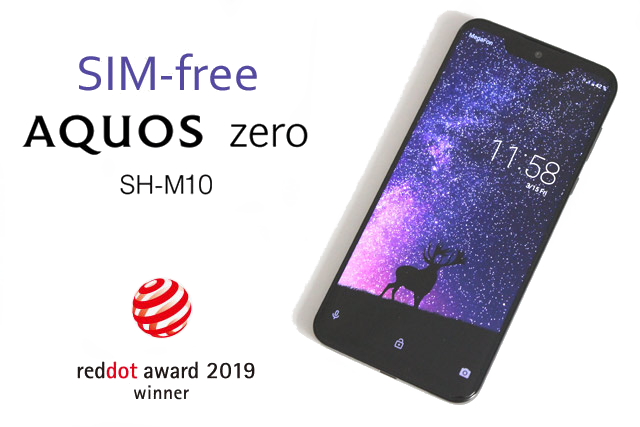
The SIM-free variant of the AQUOS zero reached shelves about four months after SoftBank's exclusive release. Several Japanese MVNOs began offering it from April 2019, including Rakuten Mobile, mineo, IIJmio, gooSimseller, and DMM mobile, with prices ranging from 79,800 to 96,000 Yen (714–857 USD) excluding tax (8%).
The SH-M10 supports a fairly complete range of radio frequencies:
- LTE: Band 1 (2.1 GHz) / Band 2 (1.9 GHz) / Band 3 (1.8 GHz) / Band 4 (1.7 GHz / 2.1 GHz) / Band 8 (900 MHz) / Band 11 (1.4 GHz) / Band 12 (700 MHz) / Band 17 (700 MHz) / Band 19 (800 MHz) / Band 26 (800 MHz) / Band 28 (700 MHz) / Band 41 (2.5 GHz) / Band 42 (3.4 GHz)
- 3G: Band 1 (2.1 GHz) / Band 2 (1.9 GHz) / Band 4 (1.7 GHz / 2.1 GHz) / Band 8 (900 MHz) / Band 19 (800 MHz)
- GSM: 850 / 900 / 1800 / 1900 MHz
With such a broad selection of bands, it should work just fine in a great many parts of the world.