
Created: 8 May 2019 · Last edited: 23 September 2026
Behold! the new Aquos R3 has now arrived – with a new 5th-generation IGZO display and a new (finally) camera sensor.
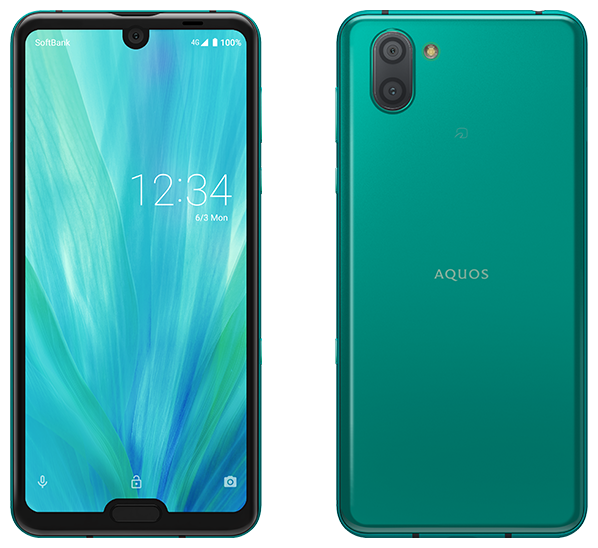
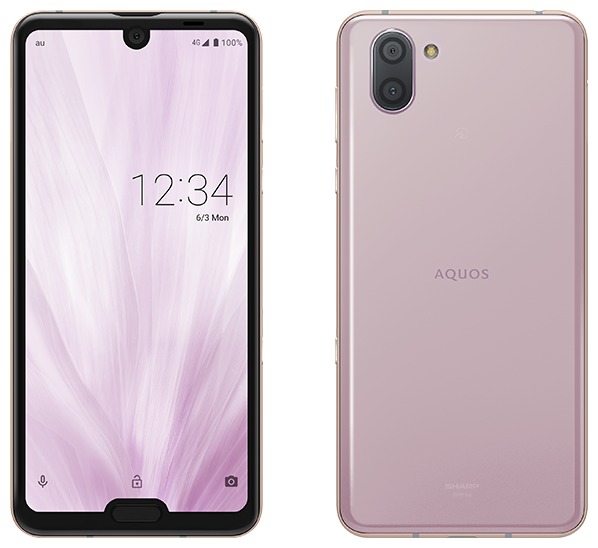
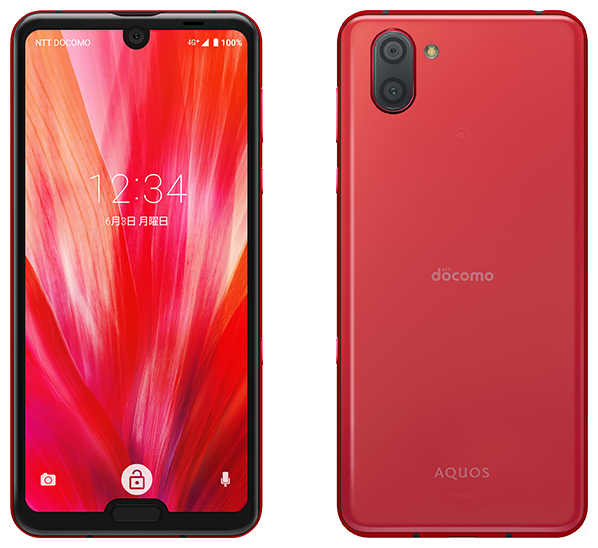
There is no surprise in the design, however: the Aquos R3 is simply a larger version of last year's Aquos R2 compact. The dual-notch display has one cutout at the top for the inner camera and one cutout at the bottom for the fingerprint scanner. All four corners are rounded, too.
But this is the next-gen IGZO that Sharp calls Pro IGZO and it's capable of reproducing one billion (that's 1 000 000 000) colours – for faithful reproduction of the HDR (TrueHDR 10). This means a true 10-bit colour-depth display only found on professional designer monitors (meaning it can reproduce 1024 shades of each of the three primary colours, or the so called 30-bit colour). In comparison, the Sony Xperia 1, announced at the end of February 2019, has a 10-bit equivalent display (8-bit with 2-bit smoothing).
Brightness levels have seen a two-fold increase from those on the Aquos R2. The 120 Hz display refresh rate is back with further improved (approx. 10%) energy saving functionality. Sharp had decreased it to 100 Hz on the Aquos R2.
The resolution of this 6.2-inch Pro IGZO display is 3120 x 1440 px. The display has a new Outdoor View function that automatically adjusts brightness and contrast levels for optimal visibility in direct sunlight. Dolby Vision and Dolby Atmos (stereo speakers), introduced with the first of the Aquos R series, ensure unparalleled viewing and listening experience while watching video and playing games.
The Aquos R3 main selling point is, however, its camera setup. Sharp seem intent on separating photo from video-capture and the two sensors of the phone's rear shooter perform different functions, like in last year's Aquos R2, only better.
But this time it's the other way round: the video camera boasts the greater number of pixels with its 20.1 MP, ultra-wide-angle lens (125°), f/2.4, 18 mm focal length, and a powerful electronic camera shake correction. The video sensor has the so called "Quad-Bayer arrangement" of its pixels, introduced earlier in 2019 and invented by Kodak's Bryce Bayer (read more).
The video camera is equipped with a new AI feature called "AI Live Story", which will automatically extract the highlights of the video recording by analysing smiles and movement changes to create a 15-second digest movie in real time. Make that three movies actually, as it will create 3 patterns, while adding background music and effects (wut?). The AI Live Shutter feature introduced with the Aquos R2 is here as well to automatically take photos while recording video.
The photo camera has a surprisingly small number of pixels – but pixels ain't the only important thing, right? – 12.2 MP; they are actually large pixels (1.4 µm), that's why.
Sharp have finally, after more than five years, managed to improve the lens aperture and it is now f/1.7. The camera has a 78° wide-angle sensor, 26 mm focal length (35 mm film equivalent). The newly developed sensor is called ProPix2 and it has a Dual-Pixel Phase Detection and Contrast Detection auto-focus.
Artificial intelligence plays a key role here, as well, by tracking subject movement and adjusting shutter speed and exposure – it was built with running children and pets in mind. When taking a photo in a dark environment, the AI will automatically perform high-speed continuous shooting and extract the image that has the least blur.
The Aquos R3, being Sharp's flagship, naturally comes with the best processor available, the Snapdragon 855, has 6 GB of RAM (LPDDR4X) and 128 GB of built-in storage memory; storage can be expanded using microSDXC cards of up to 512 GB. Further improvements in IGZO technology (idling stop) thanks to the more powerful processor have led to some 30% higher energy savings compared to last year's Aquos R2.
The heat dissipation mechanism has seen advancement, too, to allow prolonged gameplay and video watching without getting too hot under the hood. The re-introduction of Qi wireless charging with powerful 11 Watt power delivery means very rapid charging of the 3200 mAh battery, which, although smaller in comparison with competing brands, is ultimately not – because IGZO, even 5th-generation Pro IGZO.
The inner camera is almost the same as the one found on the Aquos R2: it has a 16.3-megapixel sensor with aperture size of f/2.0, wide-angle (equivalent to 80° on a 25-mm sensor).
Sharp's announcement reveals a total of five colour versions: premium black and platinum white, which will be the available colours in the SIM-free version, and blue-green, pink, and red, which will be offered by carriers (alongside the black and white versions).

The colour options on Docomo are premium black, platinum white, and luxury red (photo).
The Aquos R3 measures about 156 mm × 74 mm × 8.9 mm, and weighs 185 g, which is significantly more than the extremely lightweight Aquos Zero's 146 grams, but still better than other 2019 flagships having 6 or more inches of screen estate.
Both the phone's front and rear panel are covered by Corning® Gorilla® Glass 5 (3D-tempered glass), with an aluminium frame holding the two together.
The Docomo version, SH-04L, supports the following range of radio frequencies:
FD-LTE: 2.0 GHz (B1), 1.7 GHz (B3), 800 MHz (B19), 850 MHz (B5), 1.5 GHz (B21), 700 MHz (B12, B17, B28)
TD-LTE: 3.4 GHz, 3.5 GHz (B42), 1.9 GHz (B39)
3G (W-CDMA): 2 GHz (B1), 800 MHz (B6), 800 MHz (B19)
GSM: 850, 900, 1800, 1900 MHz.
All Wi-Fi standards are supported: b/g/n/ac – at 2.4 GHz and at 5.x GHz. The Bluetooth version is 5.0. Both OneSeg and FullSeg digital television standards are supported.
Originally released with Android 9.0, the Aquos R3 SH-04L received its upgrade to Android 10 on 23 March 2020. About a year later, on 13 April 2021, the upgrade to Android 11 began to roll out.
The Docomo specifications page lists all possible Android UI languages as available on the handset.
The Aquos R3 has a 3.5 mm jack for audio output and a USB-C connector that allows wired charging using USB Power Delivery.
Specifications
- Display: 6.2 inches, 3120 × 1440 px — Pro IGZO LCD / 120 Hz
- CPU: Qualcomm Snapdragon 855 (SDM855) — 4 × 2.8 GHz + 4 × 1.7 GHz
- Rear camera:
- 12.2 MP CMOS, PDAF + CAF, OIS, HDR, f/1.7, 78° wide-angle
- 2160p @ 30 fps, 20.1 MP CMOS, PDAF + CAF, EIS, HDR, f/2.4, 125° ultra-wide-angle
- Front-facing camera:
- 16.3 MP CMOS, EIS, f/2.0, 80° wide-angle
- 1080p @ 30 fps
- Battery: 3200 mAh (non-removable)
- Operating system: Android
- OS version at launch: 9.0
Advertisement
 AQUOS
R3
808SH
- Waterproofing: IPX5/IPX8
- Dustproofing: IP6X
- Operating memory (RAM): 6 GB
- Built-in storage memory: 128 GB
- External storage: microSDXC, 512 GB
- The OS received an upgrade to version 10 on 3 February 2020.
- The OS received an upgrade to version 11 on 5 April 2021.
SoftBank is the first Japanese carrier to officially release the new Aquos R3 in their Summer 2019 collection, just two days after Sharp's announcement.
It is available in Elegant Green, Premium Black, or Platinum White.
On SoftBank, the Aquos R3 808SH supports the following radio frequencies:
- LTE (FDD): 2600 (B7) / 1900 (B2) / 1700 (B4) / 850 (B5) / 700 (B12/B13/B17) MHz
- LTE (TDD): 2600 (B38) MHz
- W-CDMA: 1900 (II) / 1700 (IV) / 850 (V) MHz
- GSM: 1900 / 850 MHz
 AQUOS
R3
SHV44
- Waterproofing: IPX5/IPX8
- Dustproofing: IP6X
- Operating memory (RAM): 6 GB
- Built-in storage memory: 128 GB
- External storage: microSDXC, 512 GB
- The OS received an upgrade to version 10 on 22 January 2020.
- The OS received an upgrade to version 11 on 6 April 2021.
AU by KDDI is the second Japanese carrier to officially announce the new Aquos R3 for the Summer 2019 collection. The model name is SHV44.
The colour options on AU are Premium Black, Platinum White, and Pink Amethyst (photo).
On AU, the SHV44 communication standards are 4G LTE/WiMAX 2+. The range of radio frequencies (when SIM-unlocked) includes:
- LTE (FDD): 700 MHz (Band 28), 800 MHz (Band 18/26), 800 MHz (Band 19), 900 MHz (Band 8), 1.5 GHz (Band 11), 1.5 GHz (Band 21), 1.7 GHz (Band 3), 2.0 GHz (Band 1), 3.5 GHz (Band 42)
- W-CDMA: 800 MHz (Band VI/XIX), 900 MHz (Band VIII), 1.5 GHz (Band XI), 1.7 GHz (Band IX), 2.0 GHz (Band I)
- GSM: 1900 / 850 MHz
 AQUOS
R3
SH-04L
- Waterproofing: IPX5/IPX8
- Dustproofing: IP6X
- Operating memory (RAM): 6 GB
- Built-in storage memory: 128 GB
- External storage: microSDXC, 512 GB
- The OS received an upgrade to version 10 on 23 March 2020.
- The OS received an upgrade to version 11 on 13 April 2021.
On Docomo, the Aquos R3 is offered under the code name SH-04L.
The colour options on Docomo are Premium Black, Platinum White, and Luxury Red (photo).
The Docomo version, SH-04L, supports the following range of radio frequencies:
- FD-LTE: 2.0 GHz (B1), 1.7 GHz (B3), 800 MHz (B19), 850 MHz (B5), 1.5 GHz (B21), 700 MHz (B12, B17, B28)
- TD-LTE: 3.4 GHz, 3.5 GHz (B42), 1.9 GHz (B39)
- 3G (W-CDMA): 2 GHz (B1), 800 MHz (B6), 800 MHz (B19)
- GSM: 850, 900, 1800, 1900 MHz
 AQUOS
R3
SH-R10 / PB93
- Waterproofing: IPX5/IPX8
- Dustproofing: IP6X
- Operating memory (RAM): 6 GB
- Built-in storage memory: 128 GB
- External storage: microSDXC, 512 GB
- The OS received an upgrade to version 10 on 30 March 2020.
The Summer 2019 Japanese flagship reached Taiwan and Thailand as early as August 2019, where it is selling under model name SH-R10 (PB93).
There, the Sharp Aquos R3 (SH-R10/PB93) is released with dual SIM cards (both supporting LTE standby) and the following radio frequencies:
Taiwan (priced at $22,990 TWD):
- LTE (FDD): 2600 (B7) / 2100 (B1) / 1800 (B3) / 900 (B8) / 700 (B28) MHz
- LTE (TDD): 2600 (B38) MHz
- W-CDMA: 2100 (I) / 900 (VIII) MHz
- GSM: 1800 / 900 MHz
Thailand (16,250 THB):
- LTE (FDD): 2100 (B1) / 1800 (B3) / 900 (B8) / 850 (B5) MHz
- W-CDMA: 2100 (I) / 900 (VIII) / 850 (V) MHz
- GSM: 1900 / 1800 / 900 / 850 MHz
The Taiwanese and Thai versions of the Aquos R3 are only be available in black.
Unlike the Japanese versions, which received an upgrade to Android 11 as well, as promised by Sharp Japan, the international version only got the Android 10 one.
AQUOS
R3
SH-R10A
- Waterproofing: IPX5/IPX8
- Dustproofing: IP6X
- Operating memory (RAM): 6 GB
- Built-in storage memory: 128 GB
- External storage: microSDXC, 512 GB
- The OS received an upgrade to version 10 on 30 March 2020.
The Aquos R3 is Sharp's first flagship phone to officially sell outside Japan, reaching even European markets.
There, the Sharp Aquos R3 (SH-R10A) is released with dual SIM cards (both supporting LTE standby) and the following radio frequencies:
The Aquos R3 has just launched in Europe (Poland, 18th January 2020) under the SH-R10 model name, retail price 3,400 PLN or 801 EUR/888 USD.
Europe (approx. 800 EUR):
- LTE (FDD): 2600 (B7) / 2100 (B1) / 1800 (B3) / 900 (B8) / 850 (B5) / 800 (B20) MHz
- W-CDMA: 2100 (I) / 1900 (II) / 900 (VIII) / 850 (V) MHz
- GSM: 1900 / 1800 / 900 / 850 MHz
In Europe, the Aquos R3 is only available in black.
Unlike the Japanese versions, which received an upgrade to Android 11 as well, as promised by Sharp Japan, the international version only got the Android 10 one.