Created: 1 July 2026 · Last edited: 28 September 2026
Right on schedule, Sharp's summer flagship has landed, and this year it comes with a genuine surprise buried in the spec sheet, which is more than I can say about most years. The AQUOS R11 goes on sale 9 July 2026 through DoCoMo (SH-51G) and SoftBank, with a SIM-free SH-M35 model following from the open market. There will be no R10 Pro — Sharp confirmed as much at the launch event — so the R11 is carrying the flagship torch solo this cycle (like the previous; looks like Sharp are abandoning the Rx / Rx Pro thing they introduced with the R8).
Let's start with the number everybody's been arguing about online: there is no microSD slot. Not "reduced", not "optional" — gone. Sharp even added a PDF to their own spec page titled, roughly, "so you don't have to worry about not having an SD card," which, judging by the reaction on Japanese forums, has not gone down well with the loyal AQUOS R crowd who bought into this series specifically because it kept microSD support long after everyone else dropped it. I get the reasoning — high-throughput 4K capture and AI processing don't love being routed through a bargain-bin SD card — but Sharp choosing this exact moment to also raise the price by roughly ¥50,000 over the R10 feels like adding insult to injury.
Speaking of which: DoCoMo lists the SH-51G at ¥162,470, SoftBank at ¥156,960, and the SIM-free SH-M35 (512 GB only) is expected to land around ¥160,000. Sharp attributes the jump to memory component costs and the weak yen. Take that as you will.
Onto the parts that are actually exciting. The 6.5-inch Pro IGZO OLED returns at the same FHD+ resolution (1080 x 2340) and the same 1–240 Hz variable refresh rate as before, but brightness gets a real bump: 1800 nit full white and a 3600 nit peak, said to be the brightest AQUOS panel ever made and about 1.2x brighter than the R10's screen. Smart Outdoor View optimises brightness area-by-area for legibility in direct sun, and Virtual HDR still does its trick of pushing SDR content toward HDR-level vividness. The bezels have also shrunk by roughly 21.7%, down to a claimed 1.3 mm minimum width, which pushes screen-to-body ratio to 94.5% of the glass. Small bezels are nice, I suppose, though I've never once thought "if only this phone's bezel were 0.4 mm thinner" while using one.
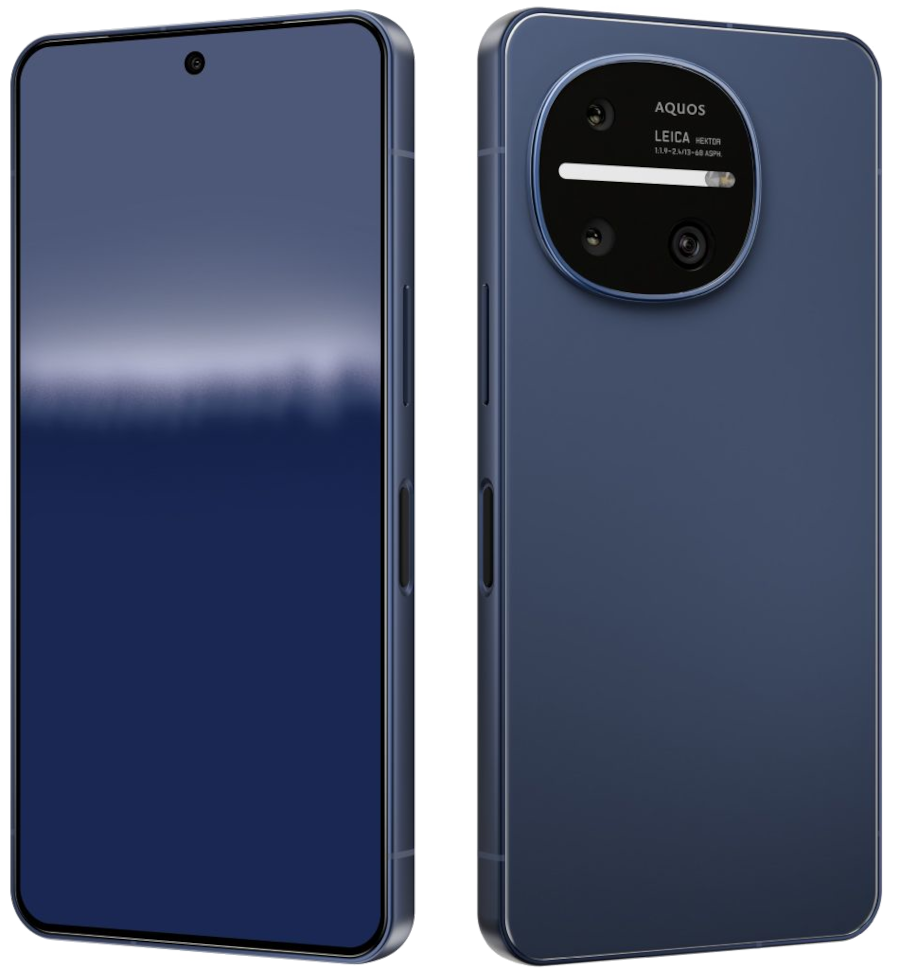
The AQUOS R11 has the thinnest bezel in the history of the R-series: just 1.3 mm.
The camera system is the headline act this year, and for good reason — it's the first time the standard (non-Pro) R-series has had a proper telephoto lens, jointly tuned with Leica:
- Standard: 50.3 MP, f/1.9 (23mm equivalent), 1/1.55-inch sensor, optical + electronic stabilisation
- Ultra-wide: 50.3 MP, f/2.2, 122° field of view (13mm equivalent), 1/2.55-inch sensor, electronic stabilisation
- Telephoto: 38.5 MP, f/2.4, 68mm equivalent (2.9x optical), 1/2.88-inch sensor, optical + electronic stabilisation, Sharp's first Leica-tuned tele on a non-Pro R phone
- Front: 50.3 MP, f/2.2, 23mm equivalent, electronic stabilisation
All lenses use Leica's HEKTOR optics, run through the new ProPix PRO imaging engine, and the 14-channel spectrum sensor is back to keep colour rendering faithful to what your eyes actually saw. A five-step multi-zoom (0.6x / 1x / 2x / 2.9x / 5.9x) blends optical and optical-equivalent reach depending on which lens is doing the work, and there's a new Smart Fit Zoom feature where the AI picks the zoom level for you based on the subject — handy, I'd imagine, for the one-handed grab-and-shoot crowd. One catch worth flagging: video tops out at 4K/60fps this generation, a step down from the 8K capability the R10 offered.
Other camera party tricks: AI shadow removal and keystone correction for photographing whiteboards or documents, "Showcase Mode" to cut down reflections when shooting through glass, blink reduction for group shots, and a new Privacy Safe function that automatically masks address-revealing details like street signs before you post to social media. Night Video, Auto HDR, Auto Macro, and Dolby Vision capture all carry over from previous models.
Under the hood sits a Snapdragon 8s Gen 4, with one 3.2 GHz core, three 2.8 GHz cores, and two 2.0 GHz cores. Sharp claims roughly 13% more CPU performance and 40% more GPU performance than the R10's chip. RAM stays at 12 GB LPDDR5X with up to 12 GB of virtual memory on top, and storage comes in 256 GB or 512 GB UFS 4.1 flavours — with, as covered above, absolutely nowhere to slot a memory card. A redesigned vapour chamber claims 2.87x the heat-dissipating surface area of the R10's, which should help keep that Snapdragon fed during longer gaming or 4K recording sessions.
Battery capacity jumps to 5100 mAh, the largest ever fitted to an AQUOS phone, charging at up to 36W and reaching a full charge in around 90 minutes. Sharp's own estimate is that it'll comfortably cover two days of typical use.
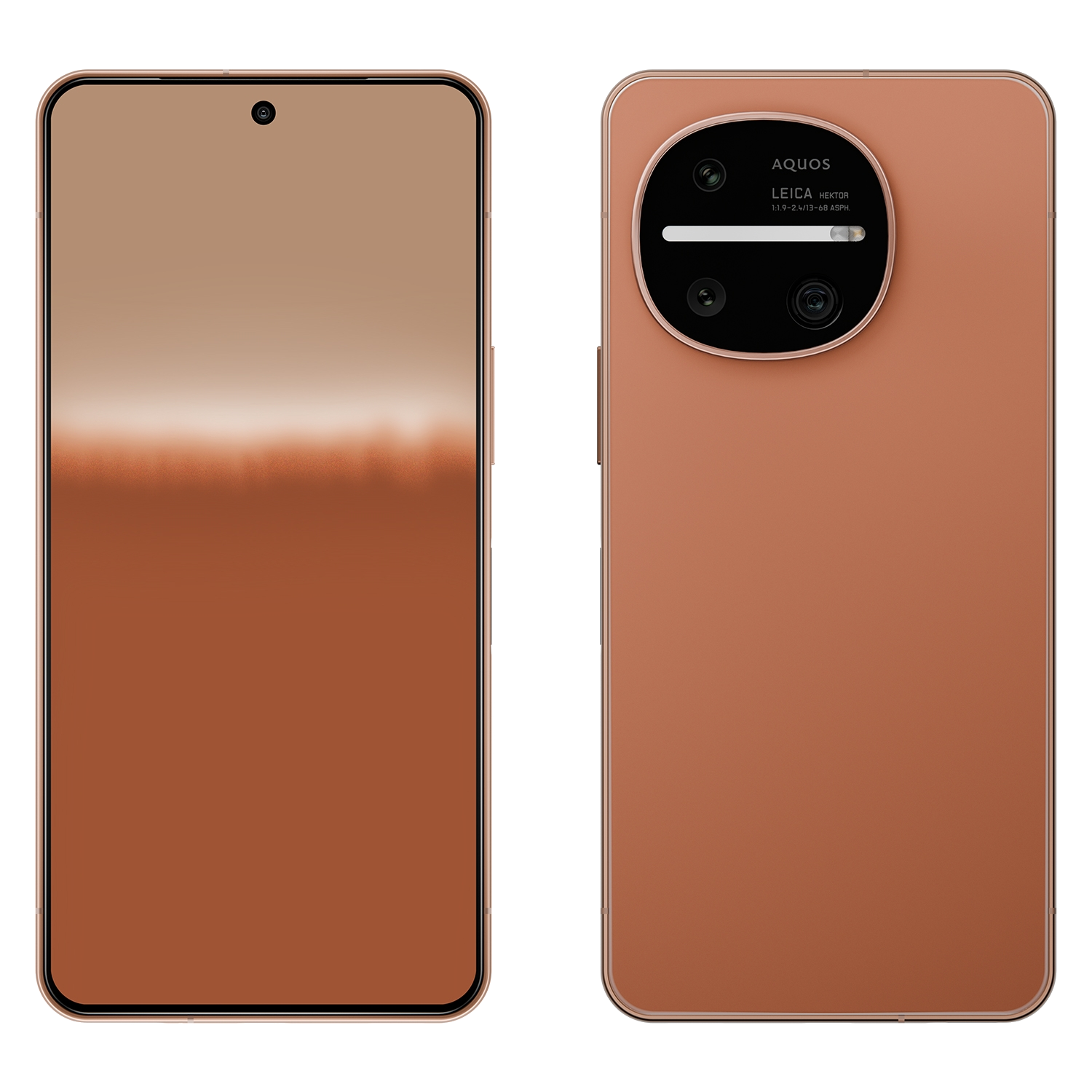
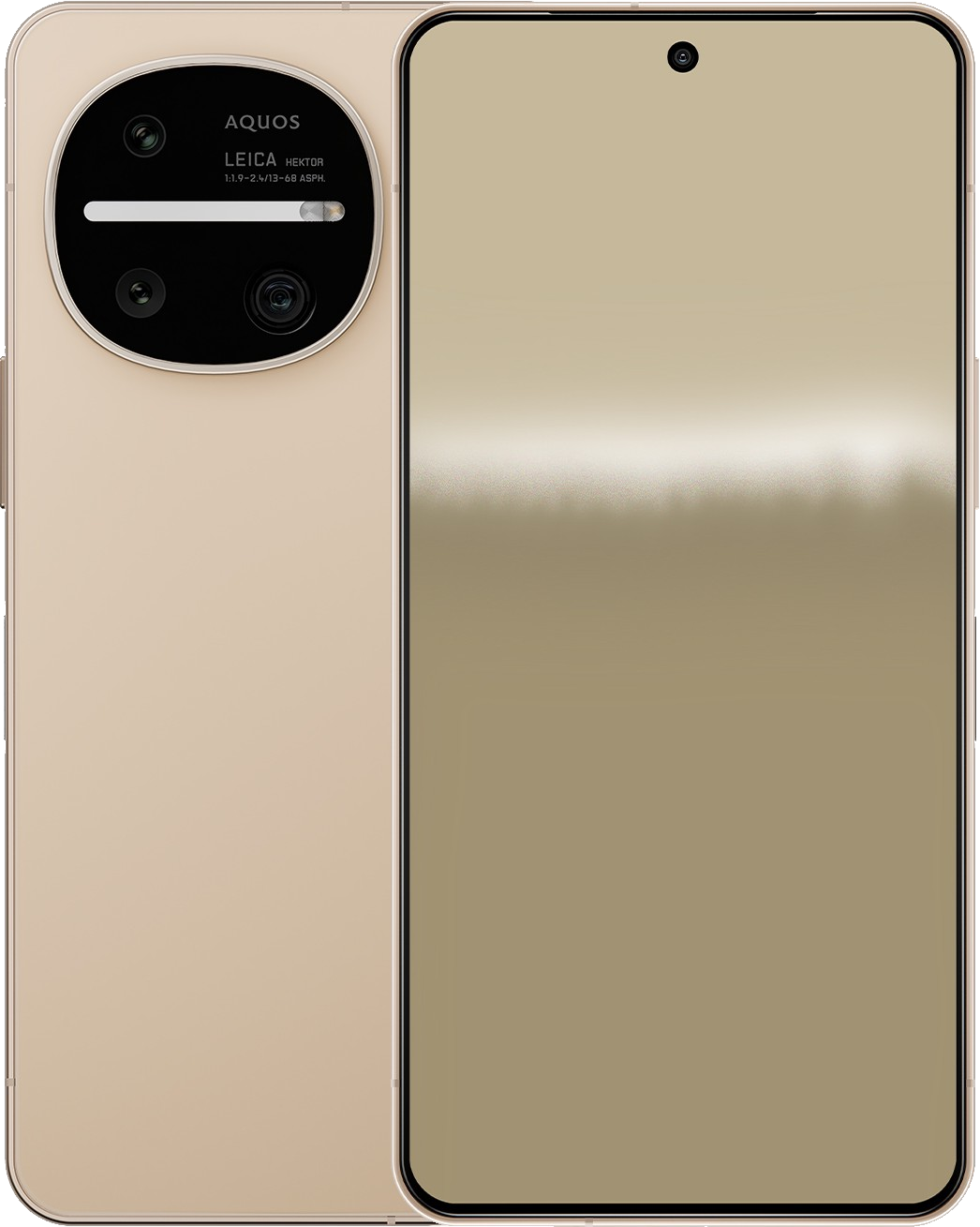
On the design side, Kazushige Miyake returns for another round of "miyake design," keeping the smooth, organic camera bump from the R10 but adding a new party piece: Akarium, a light strip running through the camera ring that glows (in eight colours, apparently) to signal notifications or just set an ambient mood on your desk. I remain unconvinced my phone needs mood lighting, but I'll admit it looks nice in the promo photos. Colours this year are Navy, Ivory, and Terracotta — a noticeably calmer palette than past years' options. Both front and back use Corning Gorilla Glass Victus 2, and the phone is rated IPX5/IPX8/IPX9 for water resistance, IP6X for dust, and MIL-STD-810G/810H compliant across a full 16-item test regime — including, unusually, resistance to alcohol wipes, hand soap, and disinfectant chemicals, which Sharp is clearly aiming at people who want to actually clean their phone rather than just admire its waterproofing on a spec sheet.
A new AI noise-cancelling feature called Vocalist, first seen on the AQUOS sense10, carries over here — register your voice once, and it'll filter out everyone else's around you during calls. There's also Home Deco for customising your home screen's wallpaper and fonts, and Lock Photo Shuffle, where the AI picks a favourite photo from your gallery to show on the lock screen each time you wake the phone.
Android ships as version 16 out of the box, with Sharp's usual promise of up to three OS upgrades and five years of security updates.
Connectivity is properly current: Wi-Fi 7 (802.11be), Bluetooth 6.0 with Auracast broadcast audio support, dual-band GNSS, USB Type-C 3.2 Gen 1 with DisplayPort 1.4 output, Osaifu-Keitai mobile wallet, and both face (mask-compatible) and fingerprint biometrics. No headphone jack, unsurprisingly. Domestic 5G bands are n1/n3/n28/n40/n41/n77/n78/n79, with a wider international band list for anyone travelling with the SIM-free model.
The AQUOS R11 is offered in Navy, Ivory, and Terracotta colours.
To summarise the changes over last year's Aquos R10:
- Third, Leica-tuned telephoto lens (2.9x optical) — a first for the non-Pro R series
- Peak brightness up to 3600 nit from 3000 nit
- Battery up to 5100 mAh from 5000 mAh
- CPU/GPU roughly 13%/40% faster (Snapdragon 8s Gen 4 vs 7+ Gen3)
- Smaller bezels, 94.5% screen-to-body ratio
- New Akarium ambient lighting and Home Deco customisation
- IPX9 water resistance added; alcohol/soap/chemical resistance added
- microSD support removed entirely
- Video capture capped at 4K/60fps, down from 8K
- Roughly ¥50,000 price increase across the lineup
Well... That's another Sharp phone I'm not buying now. If ever, then only when it's two years old and the price is affordable. I'm pretty happy with my Aquos R8 Pro and plan on staying this way for a while.
Specifications
- Display: 6.5 inches, 2340 × 1080 px — Pro IGZO OLED / 1–240 Hz
- CPU: Qualcomm Snapdragon 8s Gen 4 (SM8735) — 1 × 3.2 GHz + 3 × 2.8 GHz + 2 × 2.0 GHz
- Rear camera:
- 50.3 MP CMOS, all-pixel PDAF, OIS, EIS, f/1.9, 84° wide-angle + 50.3 MP CMOS, PDAF, EIS, f/2.2, 122° ultra-wide-angle + 38.5 MP CMOS telephoto, PDAF, OIS, EIS, f/2.4, 49° field of view
- 2160p @ 60 fps, 1080p @ 60 fps, EIS
- Front-facing camera:
- 50.3 MP CMOS, EIS, PDAF, 84° wide-angle, f/2.2
- 2160 @ 30 fps, EIS
- Battery: 5100 mAh (non-removable)
- Operating system: Android
- OS version at launch: 16
Advertisement
 AQUOS
R11
SH-M35TW
- Waterproofing: IPX5/IPX8
- Dustproofing: IP6X
- Shock-resistance: MIL-STD-810G / MIL-STD-810H
- Operating memory (RAM): 12 GB physical + 12 GB virtual
- Built-in storage memory: 512 GB
- External storage: None
 AQUOS
R11
SH-51G
- Waterproofing: IPX5/IPX8
- Dustproofing: IP6X
- Shock-resistance: MIL-STD-810G / MIL-STD-810H
- Operating memory (RAM): 12 GB physical + 12 GB virtual
- Built-in storage memory: 256 GB
- External storage: None
 AQUOS
R11
A602SH
- Waterproofing: IPX5/IPX8
- Dustproofing: IP6X
- Shock-resistance: MIL-STD-810G / MIL-STD-810H
- Operating memory (RAM): 12 GB physical + 12 GB virtual
- Built-in storage memory: 256 GB
- External storage: None
SoftBank are offering only the Navy and Ivory colour options.
AQUOS
R11
SH-M35
- Waterproofing: IPX5/IPX8
- Dustproofing: IP6X
- Shock-resistance: MIL-STD-810G / MIL-STD-810H
- Operating memory (RAM): 12 GB physical + 12 GB virtual
- Built-in storage memory: 512 GB
- External storage: None