Created: 12 September 2026 · Last edited: 2 September 2026
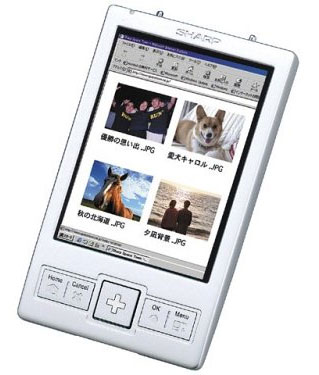
The SL-A300 “Discovery”, released in August 2002, was a radical departure from Sharp's earlier Linux Zaurus designs. Rather than a slide-out keyboard, it adopted an exceptionally thin and lightweight keyboardless PDA form factor, with input handled through the 3.5-inch touchscreen and stylus. At just 69.4 × 113 × 12.5 mm and approximately 120 g, Sharp described it as the world's smallest and lightest colour PDA. It featured a 200 MHz Intel XScale PXA210 processor, 64 MB of SDRAM and a 240 × 320-pixel, 65,536-colour reflective TFT display with front light.
The Discovery ran Embedix Linux and was designed particularly around viewing and exchanging information with a PC. Its applications included a web browser, e-mail, office software compatible with common Microsoft Office formats, and Sharp's Zaurus Shot and Zaurus Drive utilities, which provided particularly close integration with Windows PCs. Expansion was provided by an SD/MMC card slot, while an optional CE-JC1 Communication Adapter added a CompactFlash Type II slot and an additional battery, allowing CF memory, PHS and wired or wireless LAN cards to be used. Other connectivity included USB 1.1, IrDA and a stereo headphone output.
Specifications
- Display: 3.5 inches, 240 × 320 px — Reflective TFT LCD
- CPU: Intel XScale (PXA210) — 200 MHz
- Operating system: Embedix Linux
- OS version at launch: 2.0
Advertisement
Zaurus Discovery SL-A300
- Waterproofing: None
- Dustproofing: None
- Operating memory (RAM): 64 MB
- Built-in storage memory: 16 MB
- External storage: SD/MMC, CompactFlash Type I/II
Released in August 2002, the SL-A300 was the sole device of the Discovery model and was distinguished by its exceptionally thin, lightweight keyboardless design, 200 MHz XScale processor, 64 MB RAM and SD/MMC expansion. Sharp's planned July 12 release was delayed for software-quality improvements, with the device actually reaching Japanese retailers on 8 August 2002.