Created: 11 October 2026 · Last edited: 13 October 2026
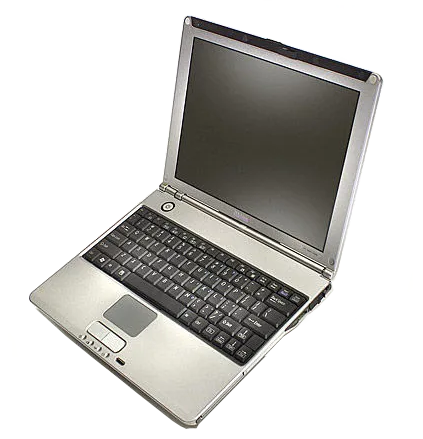
In January 2008, Apple claimed that its first MacBook Air was the world's thinnest notebook. That claim might have gone unchallenged if you overlooked the fact that Sharp had released the Actius MM10 five years earlier – and it was thinner.
Indeed, at the time of its initial release, the Actius MM10 was the thinnest and lightest notebook on the US market, according to Sharp. It measured 251 × 206 × 13.7 mm (19.6 mm at its thickest point) and weighed just 950 grams.
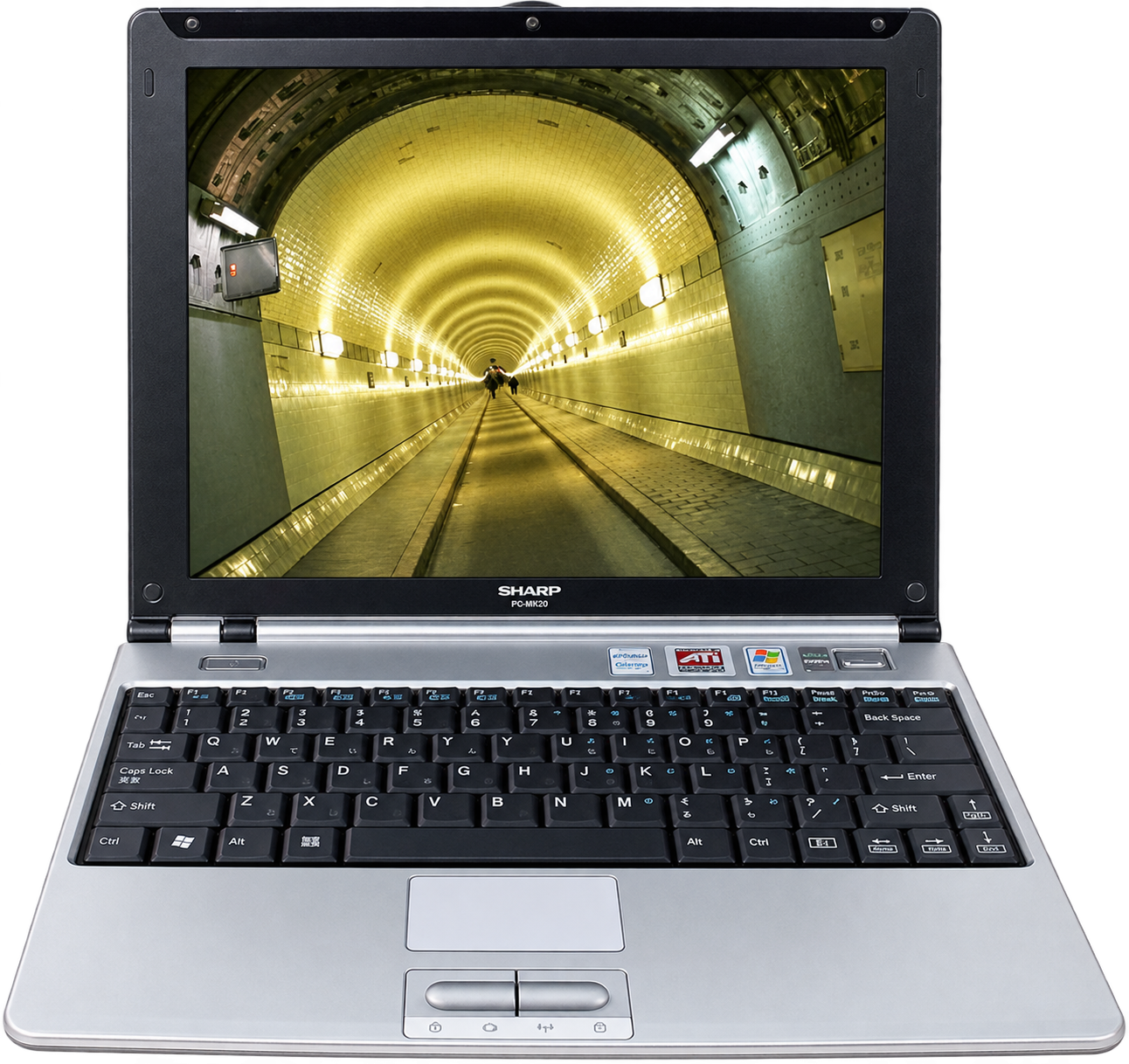
Its successor, the Actius MM20, managed to shed some more weight while nearly doubling several hardware specifications, bringing the weight down to about 910 grams.
In Japan, these were known as the Mebius Muramasa PC-MM1 and PC-MM2. "Actius" is a brand under which Sharp sold their computers on the US market only.
The display was a Sharp 10.4-inch XGA (1024 × 768 pixels) LCD with a 4:3 aspect ratio, capable of reproducing 16.77 million colours.
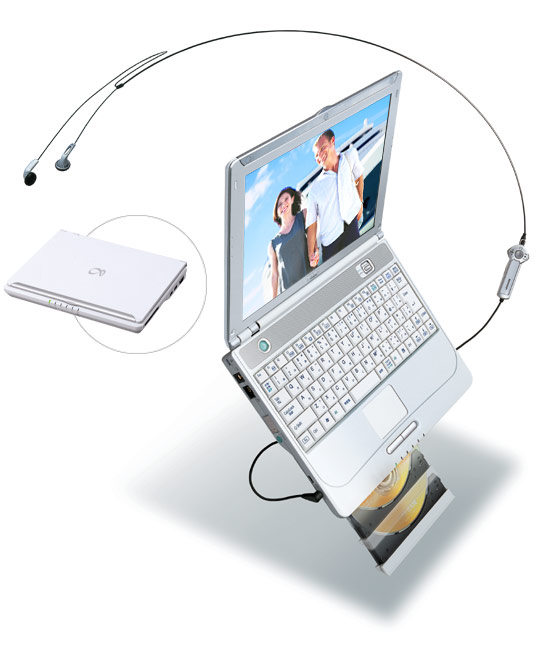
These sub-notebooks came with a docking cradle that recharged the battery and connected to a desktop computer via USB, allowing files to be exchanged and synchronised (DirectHD). Wi-Fi was built in, and a modem could be added via the PC Card slot.
The MM10/PC-MM1 was powered by a 1.0 GHz Transmeta Crusoe TM5800 processor, while the MM20 moved to the next-generation Transmeta Efficeon TM8600, still clocked at 1 GHz but offering significantly better performance thanks to its improved internal architecture. The MM20/PC-MM2 also brought more RAM, a better graphics adapter and a slightly larger hard drive.
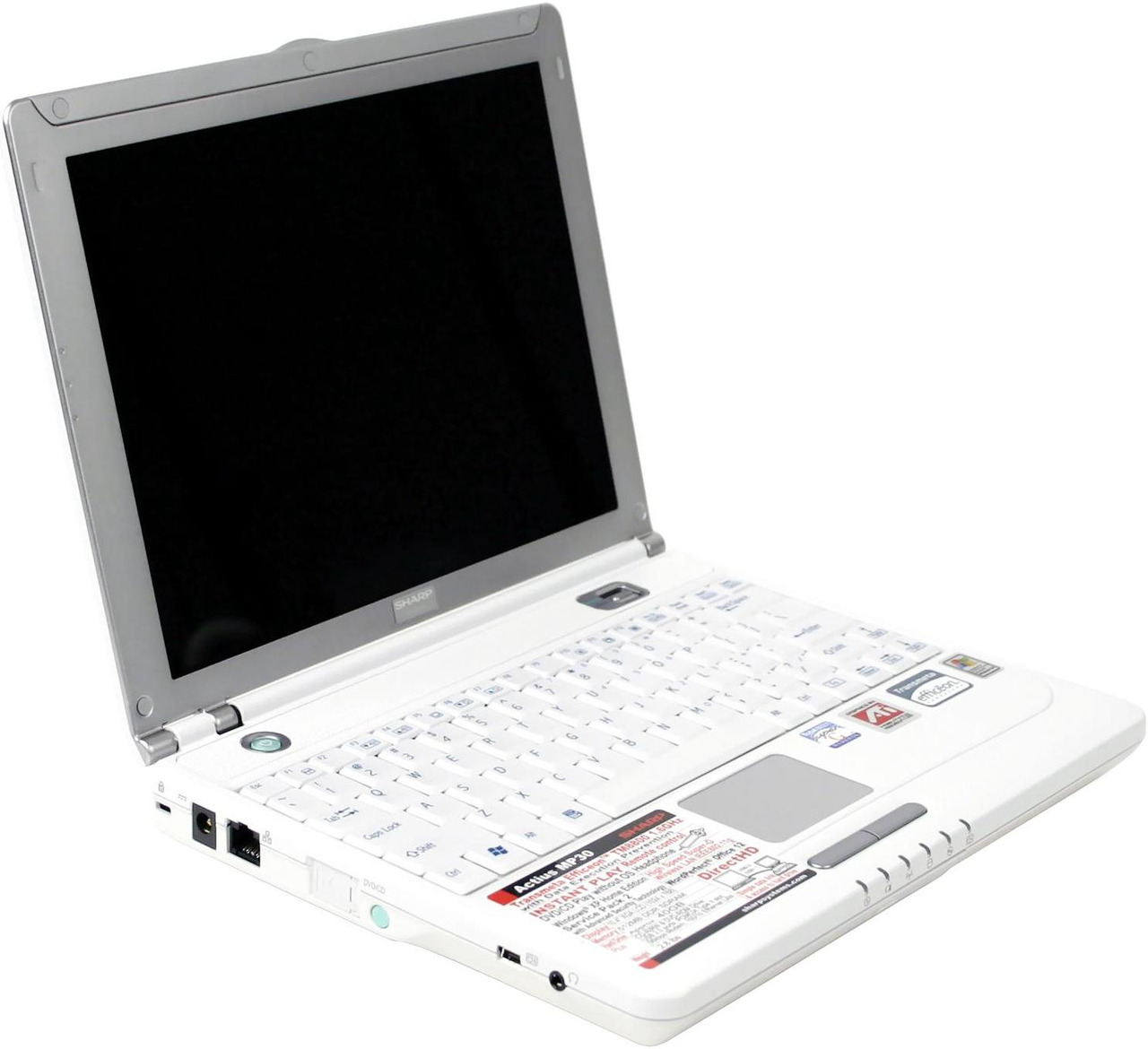
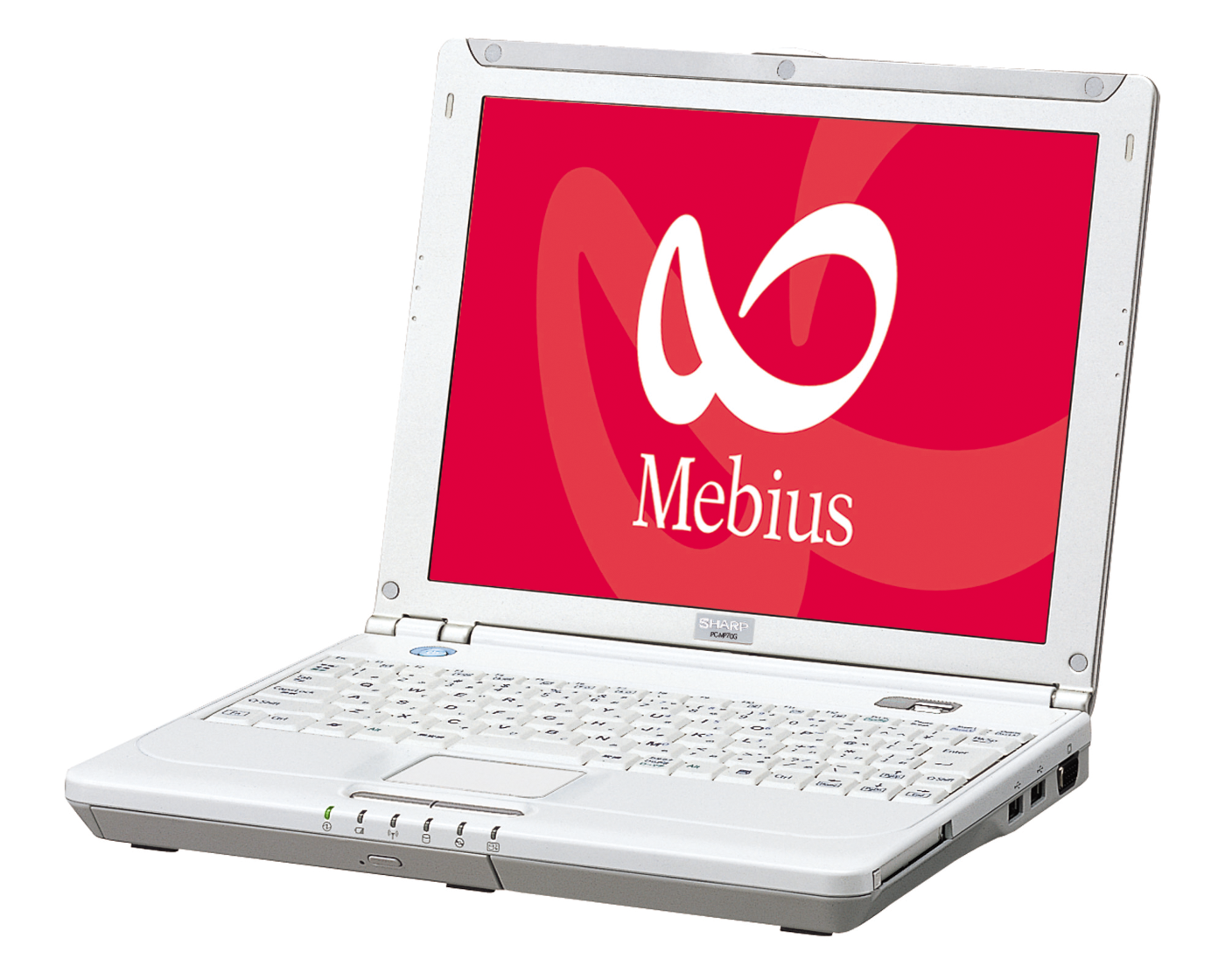
Seven months after launching the Actius MM20/Mebius Muramasa PC-MM2, Sharp decided to add an optical drive to the chassis, increasing the weight to around 1.27 kg. The result was the Actius MP30 in the US and a family of related Mebius Muramasa MP-series notebooks in Japan: the PC-MP40H, PC-MP50G and PC-MP70G. Apparently, having a built-in DVD/CD-RW drive was important for every sub-notebook – or at least Sharp thought so.
The MP-series machines used essentially the same hardware, with the model numbers indicating different configurations. They all featured a Transmeta Efficeon TM8800 processor, clocked at 1.6 GHz in the MP30, MP50G and MP70G, and at 1.4 GHz in the MP40H. The processor was built using a 90 nm process, which was an advancement from the 0.13 micrometre process used in the first generation's TM8600.
The graphics adapter was upgraded to an ATI Mobility Radeon 7500 with 32 MB of video memory. RAM was either 256 or 512 MB. The hard drive capacity also increased to 40 GB in the Actius MP30.
The display remained a 10.4-inch XGA LCD with a 4:3 aspect ratio and 1024 × 768-pixel resolution, capable of reproducing 16.77 million colours. Sharp did, however, introduce a new screen finish called ClearDisplay. According to the marketing materials, this proprietary glossy finish delivered vibrant colours, rich contrast and sharp text that was easy on the eyes, particularly when viewing multimedia or working indoors. It also complemented the laptop's "Instant Play" DVD and CD functionality, supposedly bringing the vivid look of a standalone portable entertainment system or television to the notebook. Well, you gotta make customers pay the extra $400 somehow: in the US, the Actius MP30 cost $1,899 – $400 more than the thinner and lighter Actius MM20, which didn't have an optical drive.
The MP-series notebooks retained built-in Wi-Fi and the option to add a modem through the PC Card slot. They also continued to support the docking cradle for battery charging and USB file transfers.
In the end, Sharp's move from the MM series to the MP series was a trade-off: a built-in optical drive and upgraded components in exchange for a substantial increase in weight. The MM10 and MM20 had pushed portability to the extreme, but the MP series made the machines more self-contained – at a price, both in money and in grams.
Specifications
- Display: 10.4 inches, 1024 × 768 px — Low-Reflection Black TFT LCD
- CPU: Transmeta Crusoe (TM5800) — 1.0 GHz
- Battery: 1800 mAh (removable)
- Operating system: Windows
- OS version at launch: XP
Advertisement
SHARP Mebius MM10/20 PC-MM10
- Waterproofing: None
- Dustproofing: None
- Operating memory (RAM): 256 MB
- Built-in storage memory: 15 GB
- External storage: PC Card Type II
The Actius MM10 is powered by a 1.0 GHz Transmeta Crusoe TM5800 processor, which reviewers at Small Business Computing described as the slowest they had tested "since a 900 MHz Duron desktop in June 2001". To add insult to injury, neither the 15 GB hard drive nor the 256 MB of RAM is expandable. And at $1,499, it was way overpriced, according to the same reviewers. The graphics adapter is an SMI Lynx3DM+ with 8 MB of video memory.
SHARP Mebius MM10/20 PC-MM2-xxx
- Waterproofing: None
- Dustproofing: None
- Operating memory (RAM): 512 MB
- Built-in storage memory: 20 GB
- External storage: PC Card Type II
The successor, the Actius MM20 / the Muramasa PC-MM2 series, offered a substantial performance upgrade. Its next-generation Transmeta Efficeon TM8600 processor still ran at 1 GHz but, thanks to its improved internal architecture, delivered roughly 50% higher integer performance and up to 80% higher multimedia performance. The notebook now came with 256 MB of RAM, double the MM10's capacity, and an ATI Mobility Radeon graphics adapter with 16 MB of video memory. Storage increased from 15 GB to 20 GB – not quite a doubling.
Unlike the Japanese versions, all six of them (see below), the US Actius MM20 was offered with 512 MB of RAM only.
I'm including the list of differences between the six versions simply because I find it fascinating, and I hope you will, too, as a glimpse into how things were back in the day.
| Model | RAM | Wi-Fi module | Windows ver. | Battery and Weight |
|---|---|---|---|---|
| PC-MM2-1xx | 256 MB | Optional built-in Wi-Fi | Windows XP Home or Professional SP1a | 910 g with standard battery; 990 g with medium-capacity battery; 1170 g with large-capacity battery |
| PC-MM2-5NE | 256 MB | Built-in Wi-Fi | Windows XP Home SP1a | 910 g with standard battery; 1005 g with medium-capacity battery; 1175 g with large-capacity battery |
| PC-MM2-6ZA/R/W (blue, red, white) | 256 MB | Built-in Wi-Fi | Windows XP Home SP1a | 910 g with standard battery; 990 g with medium-capacity battery; 1170 g with large-capacity battery. Additional pre-installed software. |
| PC-MM50F | 256/512 MB | Built-in Wi-Fi | Windows XP Professional SP1 | 1010 g with standard medium-capacity battery; 915 g with lower-capacity battery; 1180 g with higher-capacity battery |
| PC-MM50G | 256/512 MB | Built-in Wi-Fi | Windows XP Home SP2 | 910 g with standard battery; 1010 g with medium-capacity battery; 1170 g with large-capacity battery |
| PC-MM70G | 512 MB | Built-in Wi-Fi | Windows XP Professional SP2 | 1010 g with standard medium-capacity battery; 915 g with lower-capacity battery; 1180 g with higher-capacity battery |
SHARP Mebius MM10/20 PC-MP30
- Waterproofing: None
- Dustproofing: None
- Configuration 1: Operating memory (RAM) 512 MB, Built-in storage memory 40 GB, External storage PC Card Type II
- Configuration 2: Operating memory (RAM) 1024 MB, Built-in storage memory 40 GB, External storage PC Card Type II
Seven months after launching the Actius MM20, which truly held the champion's prize for light weight, Sharp decided to add an optical drive to the chassis, shooting the weight up to 1.27 kg. The called the new netbook Actius MP30 and my best guess is that the "P" in the series name replacing the second "M" must somehow reflect the addition of the DVD/CD-RW drive.
To be honest, they tried to upgrade the hardware, too. The processor was now an 1.6 GHz Efficeon TM8800 (next-gen, 90 nm process), but the RAM was the same 512 MB but luckily, that module could be swapped for a 1 GB one. The video graphics adapter was upgraded as well, to AMD Mobility Radeon 7500, which offered 32 MB of memory. All other features remain the same.
SHARP Mebius MM10/20 PC-MP40H
- Waterproofing: None
- Dustproofing: None
- Configuration 1: Operating memory (RAM) 256 MB, Built-in storage memory 40 GB, External storage PC Card Type II
- Configuration 2: Operating memory (RAM) 512 MB, Built-in storage memory 40 GB, External storage PC Card Type II
- Configuration 3: Operating memory (RAM) 1024 MB, Built-in storage memory 40 GB, External storage PC Card Type II
A month and a half after the Actius MP30 launched in the US, Sharp released a counterpart of sorts in Japan, but dubbed the Muramasa PC-MP40H.
It has essentially the same hardware as the Actius MP30 but the amount of installed RAM is 256 MB in the base model, upgradable to 1 GB. The same Transmeta Efficeon TM8800 processor is used but clocked at 1.4 GHz, not 1.6 GHz like on the MP30.
SHARP Mebius MM10/20 PC-MP50G
- Waterproofing: None
- Dustproofing: None
- Configuration 1: Operating memory (RAM) 256 MB, Built-in storage memory 40 GB, External storage PC Card Type II
- Configuration 2: Operating memory (RAM) 512 MB, Built-in storage memory 40 GB, External storage PC Card Type II
- Configuration 3: Operating memory (RAM) 1024 MB, Built-in storage memory 40 GB, External storage PC Card Type II
The Mebius Muramasa PC-MP50G uses the Efficeon TM8800 processor clocked at 1.6 GHz.
SHARP Mebius MM10/20 PC-MP70G
- Waterproofing: None
- Dustproofing: None
- Configuration 1: Operating memory (RAM) 256 MB, Built-in storage memory 60 GB, External storage PC Card Type II
- Configuration 2: Operating memory (RAM) 512 MB, Built-in storage memory 60 GB, External storage PC Card Type II
- Configuration 3: Operating memory (RAM) 1024 MB, Built-in storage memory 60 GB, External storage PC Card Type II
The Mebius Muramasa PC-MP70G uses the Efficeon TM8800 processor clocked at 1.6 GHz.